1.
On my map of Kraków for many years is a 12 meter length of wall on Ul. Lwowska in the Podgórze section of the city. With an unusual scalloped design—evocative of the traditional shape of Jewish tombstones—it is one of two surviving fragments of the wall that enclosed the Kraków Ghetto during the Second World War.
In the spring of 1983, probably to mark the 40th anniversary of the liquidation of the Ghetto on 13-14 March 1943, a memorial plaque was installed on the wall. Here is a period photograph by Monika Krajewska from April 1983, now in the collection of Beit Lohamei Haghetaot/Ghetto Fighters’ House Museum in Israel:
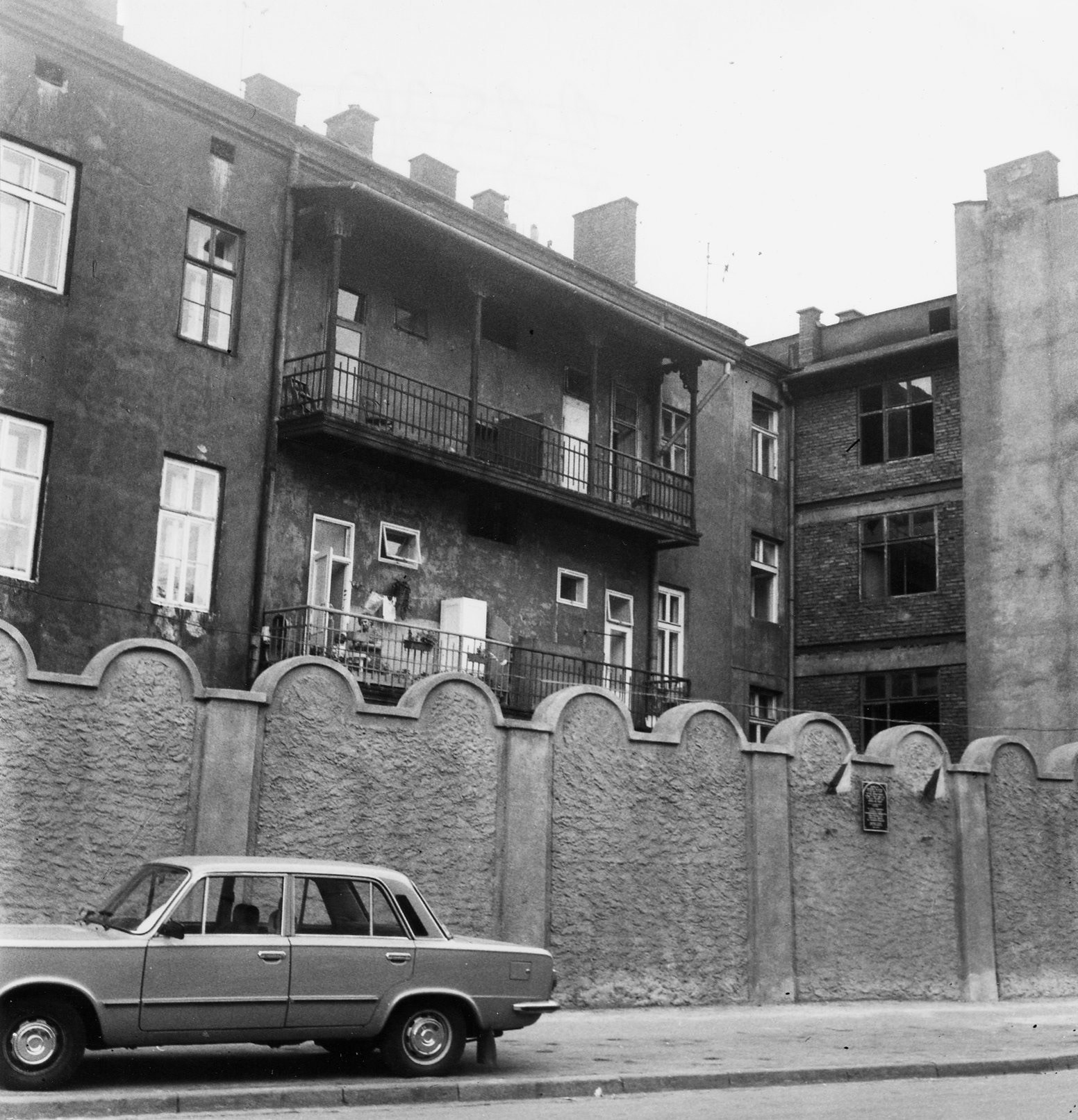
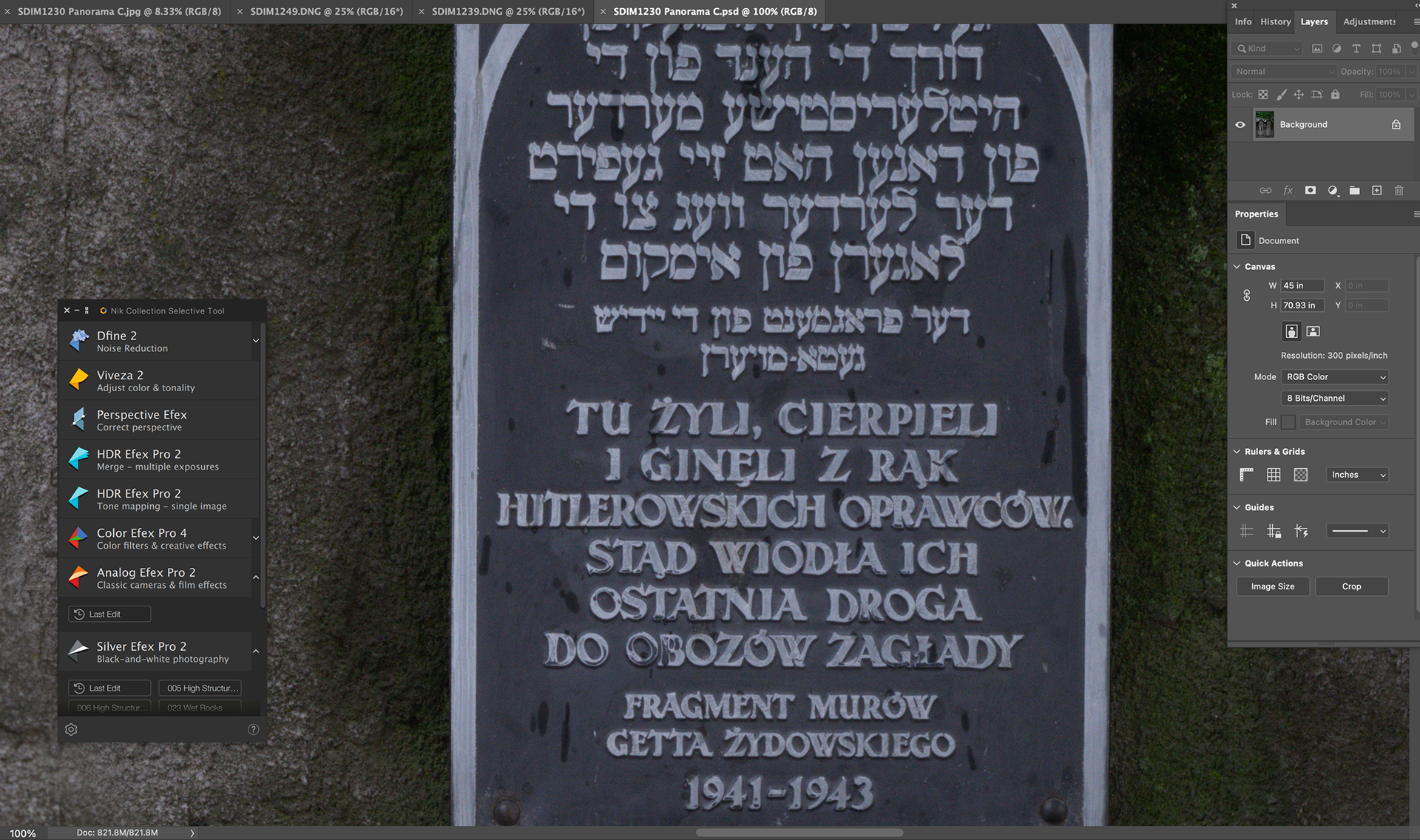
The plaque contains two short texts, in Yiddish and Polish:
דא געלעבט געליטן און אומגעקומן דורדּ די הענד פֿון די היטלעריסטישע מערדער פֿון דאנען האט זיי געפֿירט דער לערדער וועג צו די לאגערן פֿון אימקום. דער פֿראגמענט פֿון די יידיש געטא־מויערן.
TU ŻYLI, CIERPIELI I GINĘLI, Z RĄK HITLEROWSKICH OPRAWCÓW, STĄD WIODŁA ICH OSTATNIA DROGA DO OBOZÓW ZAGŁADY. FRAGMENT MURÓW GETTA ŻYDOWSKIEGO 1941-1943.
Here is the plaque as it looks today:
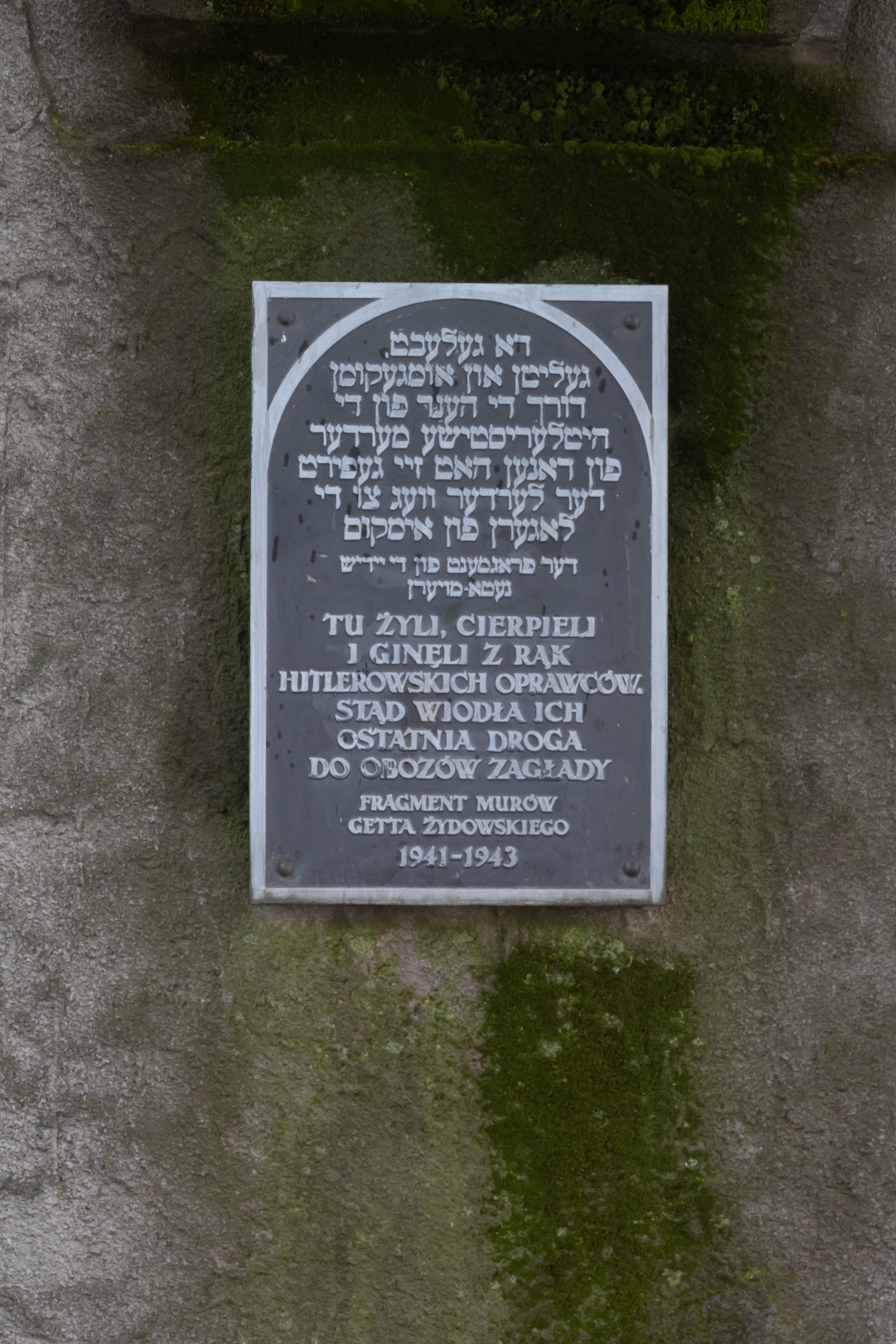
The Yiddish and the Polish are close. An English version of the Yiddish text would be:
“Here [they] lived, suffered, and perished at the hands of the Hitlerite murderers. From here the last road led them to the camps of the Holocaust. The fragment of the Jewish ghetto walls, 1941-1943.”
And an English version of the Polish would be:
“Here they lived, suffered, and died at the hands of the Hitlerite torturers. From here led their last road to the camps of the Holocaust. Fragment of the Jewish ghetto walls, 1941-1943.”
In both versions, of course, the term “Jewish ghetto” is an abbreviated way of saying “German-made ghetto for Jews,” and not a reference to a ghetto in Kraków where Jews lived before the war (there was no such ghetto), a point that would have been obvious to everyone in 1983. It is likewise obvious enough but bears saying that the 1983 plaque treats the Kraków Ghetto as a synecdoche for the Holocaust, a part representing the whole. This is understandable: massive crimes comprised of intricate operations implicating whole societies need shorthand terms. The tendency of memorial terms to flatten their historical referents—memory and history being, as always, distinct cultural projects—is a constant danger. Still, the text on the Ghetto wall leaves a distorted impression about the ways the Holocaust played out in Kraków. The Jewish population crammed into the Kraków Ghetto between March 1941-March 1943 was approximately 15,000-18,000 (in an area that previously housed 3,000 people). Why this number? To put it simply: of the approximately 70,000 Jews in Kraków on the eve of the war in 1939, some 55,000 were expelled from the city between May-December 1940. This is to say that of the 96%-97% of Jews in Kraków in 1939 who were subsequently murdered in the Holocaust, for more than three-quarters of them—contrary to the impression the plaque gives—the road to death did not lead through the Ghetto. There is today no supplemental information beside the memorial plaque to nuance and contextualize the historical record.
The Yiddish text on the 1983 plaque contains three errors. “[U]mgekumen” is missing its last ayin (perhaps for reasons of space). “[D]er lerder veg” should be “der letster weg,” meaning “the last road,” and “imkum” should be “umkum,” meaning “death, end, loss, mass death.” (There is a case to be made that the Polish Galician dialect of Yiddish would be responsible for the vowel shift from “umkum” to “imkum,” but if so there is still an error, as it would have then been “imkim.”) The term “umkum” means “death” in a general sense, but does exist as a proper noun for what English calls the Holocaust, though the more common Yiddish term is “khurbn.” More peculiar is that the Yiddish text begins “[D]oh gelebt…” without the auxiliary verb “hobn” or the impersonal pronoun “men.” The grammatically correct form would be “[D]oh hot men gelebt, gelitn….” meaning “Here, one/they lived, suffered…” It is possible that the omission of the auxiliary verb and the impersonal pronoun were colloquial forms of spoken Kraków Yiddish, but very unusual in a written text. A better explanation is that “Doh gelebt” is a calque from the Polish “[T]u żyli…”, “[H]ere [they] lived…” Dropping the pronoun is common enough in Polish, though doing so raises a different question: why use the vague "they" in the first place, and not simply identify the victims as Jews? This question will return in a moment.
The calque suggests that the Polish text was written first, which raises another question: why is there a text in Yiddish at all? Today, it is highly uncommon to see Yiddish on Holocaust memorials; this plaque on Lwowska is the only one I know in Kraków. Even though some 85% of the Holocaust's victims spoke Yiddish, most Jewish-signifying memorial texts in Poland are in Hebrew, as elsewhere in the world. Why? Partly the use of Hebrew owes to its ancient status as a sacred language—the "loyshn koydesh" or "holy tongue," as Yiddish calls it. More than this, the language of the Israeli state has been embraced universally as the language for Holocaust commemoration, à la Jon Danforth-Appell's conception of Zionist realism: Israel has become an elemental cohering force in most forms of Jewish self-conception and in international conceptions of Jewish collectivity. But even if we accept the prepossessing status of the Israeli state in the contemporary conception of the Jewish, and even if we construe its existence as some kind of redemption for the genocide—a point I myself reject—is this then to suggest that the Holocaust's victims somehow died for Zionism? However appalling, this question will also return.
In Kraków, the oldest and most important Jewish communal statement in memory of the Holocaust is without Yiddish. It appears at the former KL Płaszów camp, where some 6,000-8,000 Jews were taken during the Ghetto liquidation of March 1943. According to Janek Gryta, in his study of pre-1968 Holocaust monuments in Poland, this marker was present in some form from 1947, with the text assuming its current form at least by 1964. After the end of the communist period, I would guess in the 1990s, the Jewish community added a tablet to the back side of the stone, with the same text in Hebrew.
Here is an English translation of the Płaszów marker’s Polish text, by Michał Szymonik:
“Here, in this place, in the years 1943–45, several dozen thousand Jews brought from Poland and Hungary were tortured, murdered and incinerated. We do not know their names. Let us replace them with one name: the Jews. Here, in this place, one of the most severe crimes was committed. Human language knows no words to describe its atrocity, its unspeakable bestiality, ruthlessness, cruelty. Let us replace them with one word: Hitlerism. The Jews who survived the fascist pogrom pay homage to the memory of those murdered, whose final scream of despair is the silence of this Płaszów cemetery.”
Both the Płaszów and the Ghetto wall text use the term “Hitlerite” to mean fascist German, for what I surmise to be political reasons specific to the communist period in Poland. To contrast Jewish victims with “German” perpetrators would have been problematic, lest the memorial suggest that fellow communists—East Germany was, of course, a communist country in the 1980s—were somehow responsible for fascist crimes. The Płaszów text, however, overtly does something that the Ghetto wall text does not: it uses the word “Jews” specifically, instead of the implied “they.” The fudging of explicit mention of Jewish victims was standard practice in the communist era, following the Soviet suppression of acknowledgment of specific Jewish victimhood and the uniqueness of the genocidal crimes against Jews in favor of a universal narrative of shared struggle against fascism. That the Płaszów plaque acknowledges Jewish victims so forthrightly makes it highly unusual.
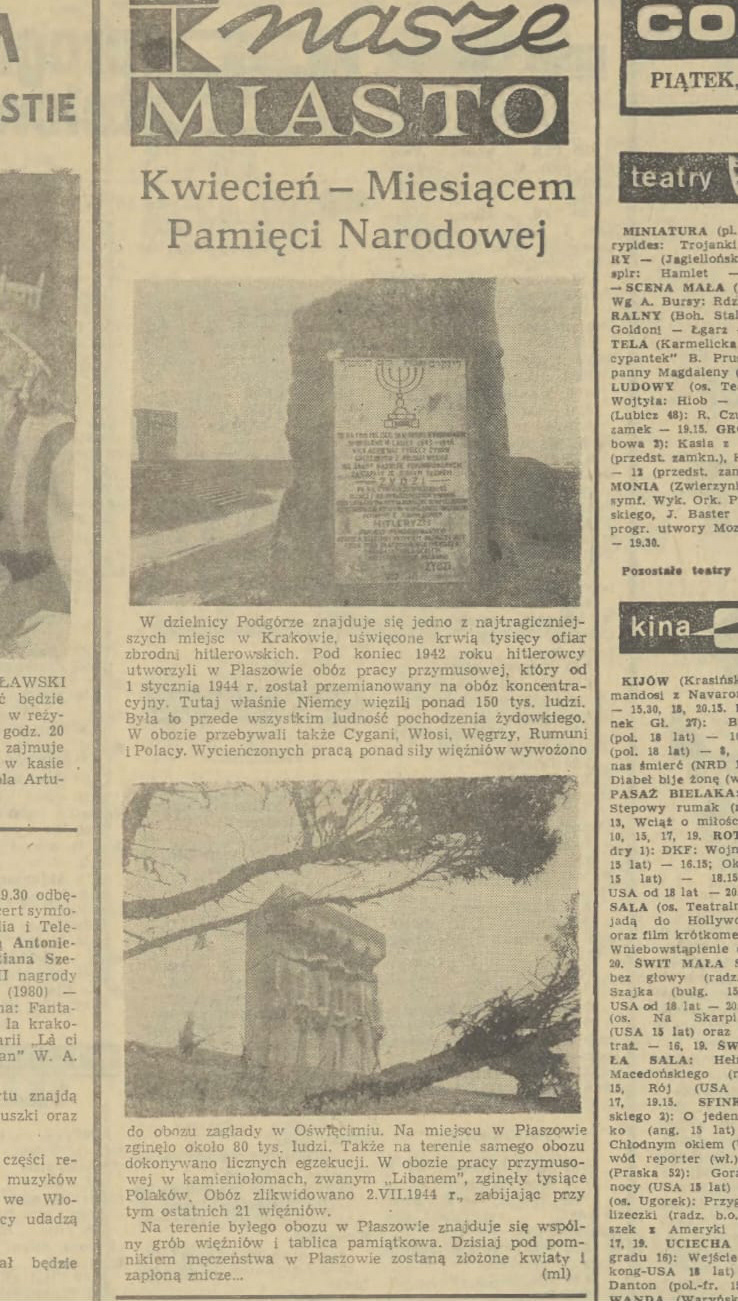
In this short 1983 article from Gazeta Krakowska, the Płaszów monument is pictured in the top photograph. The article recounts basic educational information about the camp to a Kraków reading public that evidently lacked it:
By 1983, the politics of Holocaust memory in Poland had already taken several turns. Following the Holocaust, many Jewish survivors viewed the new Polish communist government as a safe haven from earlier expressions of Polish antisemitism. However, the regime’s stance changed over time, and particularly after the Israeli Six Day War in 1967, when the Polish government followed the Soviet lead and severed diplomatic relations with Israel, in condemnation of Israeli aggression. In March 1968, to deflect major public discontent and student protests, the Polish state claimed that Jewish officials were responsible for the economic and political crisis gripping the country, and scapegoated Jews in general as enemies of the people. The “Anti-Zionist Campaign” was the Polish state’s own term for the persecution and forced exile of approximately half of Polish Jews between 1968-1972, about 15,000 people, leaving those who remained to live quiet, and in some cases hidden lives.
The "Anti-Zionist Campaign" was still rolling in the early 1980s. Following the declaration of martial law in Poland in December 1981, hardliners within the ruling Polish United Workers’ Party accused the democratic opposition of being infiltrated by “Zionists” and foreign agents who sought to destroy the socialist state. In 1981, communist authorities founded the Grunwald Patriotic Union, which actively published antisemitic propaganda and pushed hardline “Anti-Zionist” rhetoric under the guise of defending Polish patriotism. Official state media frequently relied on “Anti-Zionist” language to frame Jewish intellectuals as disloyal to Poland, and to discredit the Solidarity (Solidarność) trade union and independent opposition movements.
All of this is to say that the 1983 Lwowska Street plaque forms a kind of a Rorschach test for the political memorialization of genocide. On one hand, it might be that it was simply natural, for once, for the plaque to speak in the language of the victims. On the other hand, it might be that the organization responsible for the text on the plaque—I am guessing that the state did not author the text, rather the state-sanctioned Social and Cultural Association of Jews in Poland (Towarzystwo Społeczno-Kulturalne Żydów w Polsce, known as the TSKŻ)—chose Yiddish for other reasons. Yiddish would have appealed to the communist authorities because it was, conveniently, in little use. It was also the language of the prewar Jewish Bund, a secular and socialist political party that championed Yiddish as the language of Jewish liberation, and advocated for “Doikayt,” a Yiddish term meaning “Hereness”—Jewish liberation wherever Jews live, against the Zionist insistence on a separate Jewish state. Most of all, TSKŻ probably judged it unlikely that a regime overtly committed to “Anti-Zionism” would agree to a plaque in Hebrew, the language of Zionism and the state of Israel. The errors on the plaque suggest that the use of Yiddish was already somewhat unnatural among Kraków Jews, but it offered a workaround: the Jewish community would enlist Yiddish to quietly serve the Polish state’s hostility to Jews. They would compromise with tactical contemporaneous antisemitism in order to install a memorial to the victims of earlier genocidal antisemitism.
2.
When I visited the Kraków Ghetto wall in May 2026, something new had appeared. Sometime recently, a person living in the building behind the wall hung a Palestinian flag from the balcony, so that it would be visible to people visiting the memorial. This is the photograph I made:
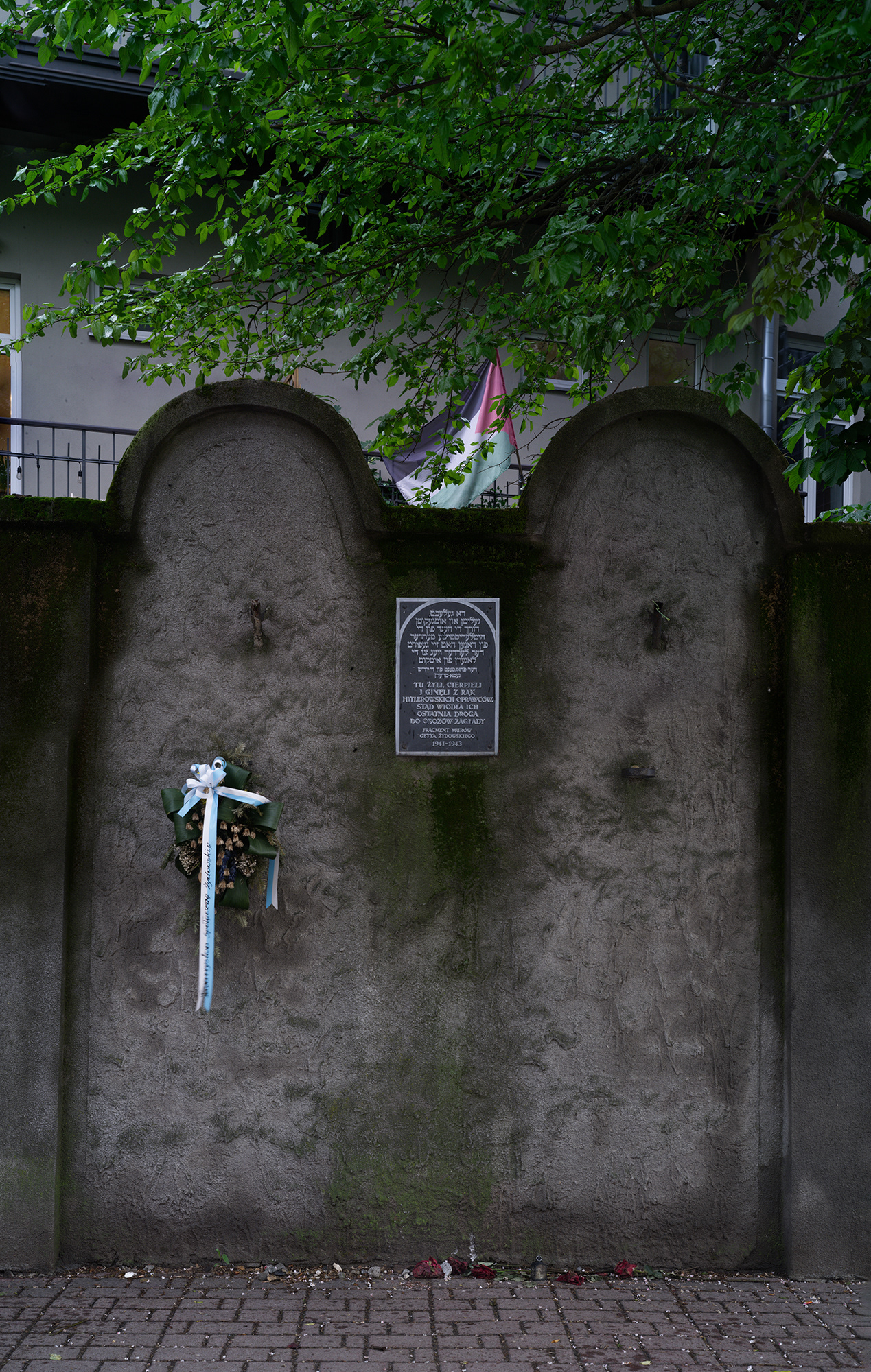
This photograph was arduous to make. Fighting the rain, I set up my 4x5 view camera with a 150mm Rodenstock Sironar-N lens, and attached a small Sigma fp full frame digital camera via an adapter. Using the adapter’s rear shift plus front rise and fall as normal with a bellows camera, I made 65 exposures, then stitched them together to make a single photograph, which will print at 72” at full size. Here is a 100% crop showing the photograph’s high level of detail:
It seems to me that the flag introduces a second Rorschach test, or some extension of the first. Many Jews will be repulsed by the sight of a Palestinian flag next to a Holocaust remnant and memorial. Commitment even to one of what Omer Bartov calls Zionism’s “two faces” is enough to produce this response. Those who are protective of Israel’s ethnonationalist reality will of course find the Palestinian flag on Lwowska street in Kraków an insult. For many of them, antisemitism is a self-perpetuating and essentially ahistorical phenomenon, arising across generations and centuries, opportunistically attaching itself to whatever reasons or excuses it can find from the ongoing churn of political events. The actions of the Polish communist state—modeled on those of the Soviet state, which in turn were based on those of the Russian Imperial state and on and on in concatenated bigotry—illustrate their position in a nutshell: communist “Anti-Zionism” purportedly as international geopolitical critique in fact meant state-sanctioned antisemitism against Polish Jews at home. In short: hard-faced Zionists will see the winds of old-fashioned all-purpose Jew hatred fluttering in the flag of the Palestine liberation movement now beside the Ghetto wall.
But softer-faced Zionists may also have a problem with the flag at the wall. I am thinking of those who remember Zionism as a key instrument of Jewish survival in the 20th century, for example the descendants of stateless Jews from Europe, North Africa and the Middle East for whom Israel was one of the few or perhaps the only refuge, and likewise those who still associate Zionism with emancipatory, pluralist ideals. For such people, I suspect the Palestinian flag at the Holocaust wall will be less contumely than desecration. Desecration: if nationalism is characteristically secular religion, its Jewish variant casts the state as redeemer, the guardian of rebirth after genocide, and so forth. But just as Jewish tradition enjoins that the name of Amalek—the Jewish people’s mythic eternal enemy—should at the same time be blotted out and remembered, rebirth demands sanctification of the abyss from which it sprung. It is this abyssal holiness that the Zionist imagination sees in the Kraków wall, and a crack in this abyssal holiness that the Palestinian flag next to the wall seems to produce.
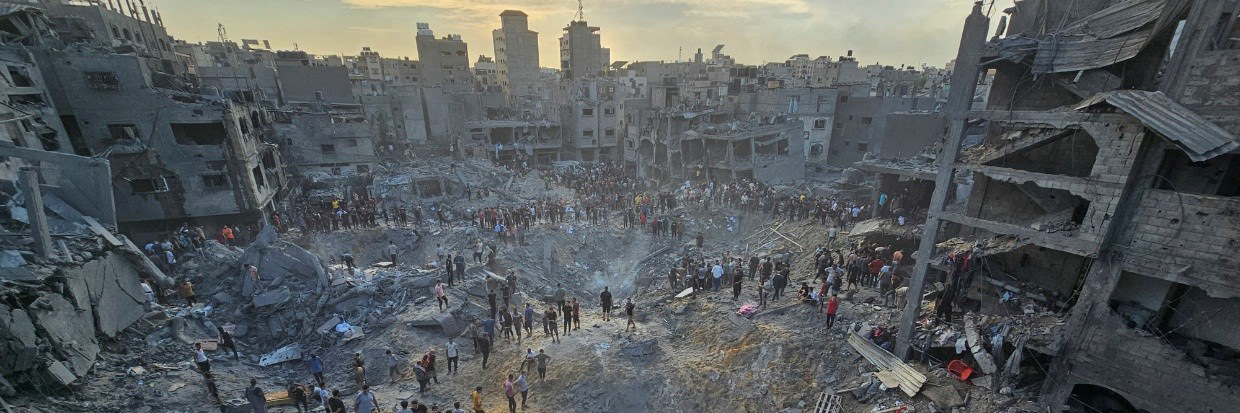
From my conversations, most of the Poles I know in Kraków, Jewish-adjacent in their personal and professional lives, are uncomfortable with the flag for reasons that stem from yet another position. For them, even as they understand that the Israeli state uses “security” as its own all-purpose justification for war on Palestine, and even as they understand the ways that the Holocaust is implicitly or explicitly mustered as the ultimate evidence for the Israeli state’s “defensive” posture, still the Holocaust is a separate matter from the Nakba, from Israeli apartheid, from the Israeli occupation of the West Bank, from Israeli state terror, from Israeli crimes against humanity, and from the Israeli genocide in Gaza. For them, Holocaust memory is already difficult enough, and dropping a Palestinian flag next to the Ghetto wall is a cheap provocation. It is as distracting and inappropriate as, say—and this example requires quite a strenuous act of historical imagination—putting a garland of yellow stars emblazoned with the word “Jude” next to a to-be-built memorial in Gaza City formed from the preserved ruins of an apartment tower whose residents were crushed to death under 2000 pound Israeli bombs.
My own reaction to the flag by the wall was different. I have never been a Zionist. By this I mean I never learned to fuse my own ethical and spiritual values as a Jew with the realities of a Jewish ethnostate founded on the conquest of historical Palestine. I never learned to equate Jewish self-determination with Jewish supremacism—as, for example, enshrined in Israel’s Basic Laws. I never learned to defend Israeli exceptionalism: among the liberal democracies of the world, only Israel demands the right to occupy and politically disenfranchise millions of people living under its control; only Israel arrogates to itself the right to systematically dispossess, segregate, injure and kill as an expression of its right to exist. Most of all, I never learned to apologize for Israel’s violations of international law—all the way to genocide—in the name of preventing another Holocaust.
To my eyes, the Palestinian flag beside the Ghetto wall was a statement that the Holocaust and Gaza are linked genocides, and going forward we cannot speak of one without the other one. I saw the flag, in essence, as the conscience of the wall. Far from viewing anti-Zionism as a threat to Holocaust memory, I—who have spent much the last quarter century working on post-Holocaust memory cultures—see the Holocaust’s legacy as demanding that we not excuse, minimize, and evade the depravity of the ongoing Nakba. Against those Jews for whom the memorial slogan “Never Again!” means “Never again to us!” I count myself among those for whom it means “Never again to anyone, including us!”
The antisemitism of Polish communist “Anti-Zionism” and the illiberalism of some anti-Zionists today are not to be denied, and are also not to be conflated with the contemporary anti-Zionism that rejects tribal ethics, tribal justice, and tribal memory. Such rejection is precisely the challenge of the first Yiddish word on the Ghetto plaque, “דאָ” (“Doh”)—“Here.” This word rhymes spiritually with the Torah’s term “הִנְנִי”, (“Hineyni”), Hebrew for “Here I am,” the classic Jewish statement of whole-hearted presence, spiritual availability, willingness to act for the good—hence Abraham’s reply when God calls out to him, likewise Moses’s reply to God at the burning bush, likewise Isaiah’s reply to God’s question of whom to send. To my eyes, the flag at the wall signifies the specificity of the Palestinian struggle, but also the other things that the Palestinian cause has come to stand for—the Palestinian flag as a universal symbol of anti-imperialism, of historical justice for the oppressed.
In my own reading of the Rorschach test, the flag and the wall companion one another. Together they warn, in the spirit of the prophets: Israeli Jews will never find the security they seek in the catastrophe they inflict on Palestinian life, as there is in general no home—at least no home worth the name—to be made in the wreckage you make of someone else’s home. Likewise the flag and the wall understood as a single symbolic statement urge our return to the foundations of Jewish ethical traditions. They insist: you cannot partition compassion. You cannot mourn mass murder in 1943 and then fail to mourn it in 1983, and you must also mourn it after 7 October 2023. In Palestine as in Poland, the slaughter of children is the slaughter of children. Compassion is compassion. To deny this simple truth is to betray ourselves categorically.
Maybe it is asking too much to distill all of this into a single photograph. If so, it could be that I said it all better in a poem I wrote a year ago on a train from Paris to Kraków—in lines that pushed themselves out of me as I traveled slowly across Europe into the geography of the Jewish past in this part of the world, where it seems I cannot stay away:
Return to Poland
Those we did not murder by warplane and sniper
we murdered by starvation, in the name of destroying future disasters.
No black sun, we pronounced, should rise over us again,
we murdered by starvation, in the name of destroying future disasters.
No black sun, we pronounced, should rise over us again,
even as the taste of bomb salt on skin is spread
far across the rubble. The journalists intoned: “historians will judge.”
Their grave voices chorused our depravity.
far across the rubble. The journalists intoned: “historians will judge.”
Their grave voices chorused our depravity.
A few of us insisted: there are two genocides for us now,
two and not one, two that are one,
the one that made us and the one that we made.
two and not one, two that are one,
the one that made us and the one that we made.
The others, most of us, insisted that murders be ranked
in sacredness, and Gaza cannot be seen
from the towers of our Jerusalem.
in sacredness, and Gaza cannot be seen
from the towers of our Jerusalem.
They called down as their witnesses
the seraphs of our own millions, who glowered
with demonic eyes that yes and yes,
the seraphs of our own millions, who glowered
with demonic eyes that yes and yes,
there are many who hate us.
But me,
I know them differently, our millions.
But me,
I know them differently, our millions.
I know them where they live:
in their ash-field addresses, the warehouses and barns
and synagogues where they were torched,
in their ash-field addresses, the warehouses and barns
and synagogues where they were torched,
the forest pits they were shot into. I still visit them.
At home they are not as their ventriloquists think.
In fact they are reticent, with little reason to speak.
At home they are not as their ventriloquists think.
In fact they are reticent, with little reason to speak.
They go on rotting, resiliently. Their rooms are wild
with goldenrod, small-flowered touch-me-nots,
all manner of alien plants. They are expert
with goldenrod, small-flowered touch-me-nots,
all manner of alien plants. They are expert
in the mineral cycle of the elements, given to ponder
bird migration and the ways the living quietly assume
the non-existing of other lives.
bird migration and the ways the living quietly assume
the non-existing of other lives.
At night they gaze at God’s great scythe
turning its silver blade from full to new,
and occasionally they burn the dross
turning its silver blade from full to new,
and occasionally they burn the dross
that collects on the slopes of the epoch,
in red reverse falls. From the millions I learned:
there is no time to wait for the historians.
in red reverse falls. From the millions I learned:
there is no time to wait for the historians.
Our mourning, they told me, is our maturation.
That time fades memory is nothing to grieve,
but that it shatters honesty, yours, now, yes.
That time fades memory is nothing to grieve,
but that it shatters honesty, yours, now, yes.
Listen: from our own library
the lined-out hymnodies and the nigguns
climb the rungs of lament, generation by generation,
the lined-out hymnodies and the nigguns
climb the rungs of lament, generation by generation,
for every next day that carves a new facelessness
for a child. That child was possibly yours,
or even you, and now will not be.
for a child. That child was possibly yours,
or even you, and now will not be.
Kraków, May 2026
______
With thanks to Asia Fruman, Maia Evrona, and Anna Wencel